In recent years, loan apps have transformed the way people borrow money. Instead of visiting banks, filling long forms, and waiting days or weeks for approval, users can now apply for loans directly from their smartphones within minutes. These digital lending platforms have become especially popular among students, freelancers, small business owners, and salaried individuals who need quick financial support.
What Are Loan Apps?
Loan apps are mobile applications that allow users to apply for and receive loans online without visiting a physical bank branch. These apps use digital verification systems, artificial intelligence, and automated credit assessment tools to evaluate a borrower’s eligibility. Once approved, funds are often transferred directly into the user’s bank account or mobile wallet.
Most loan apps offer short-term personal loans, emergency cash loans, or installment-based financing options. The entire process — from application to repayment — happens digitally.
How Loan Apps Work
The process of using a loan app is usually simple and fast:
- Download and Register: Users install the app and create an account using their phone number and identification details.
- Submit Information: Basic personal and financial information is required, such as income details, bank account, and identification documents.
- Verification Process: The app verifies data through automated systems.
- Loan Approval: Based on credit assessment, the app offers a loan amount and repayment terms.
- Instant Disbursement: Once accepted, money is transferred within minutes or hours.
Many apps provide instant approvals because their systems analyze digital behavior, transaction history, and repayment ability instead of relying only on traditional credit scores.
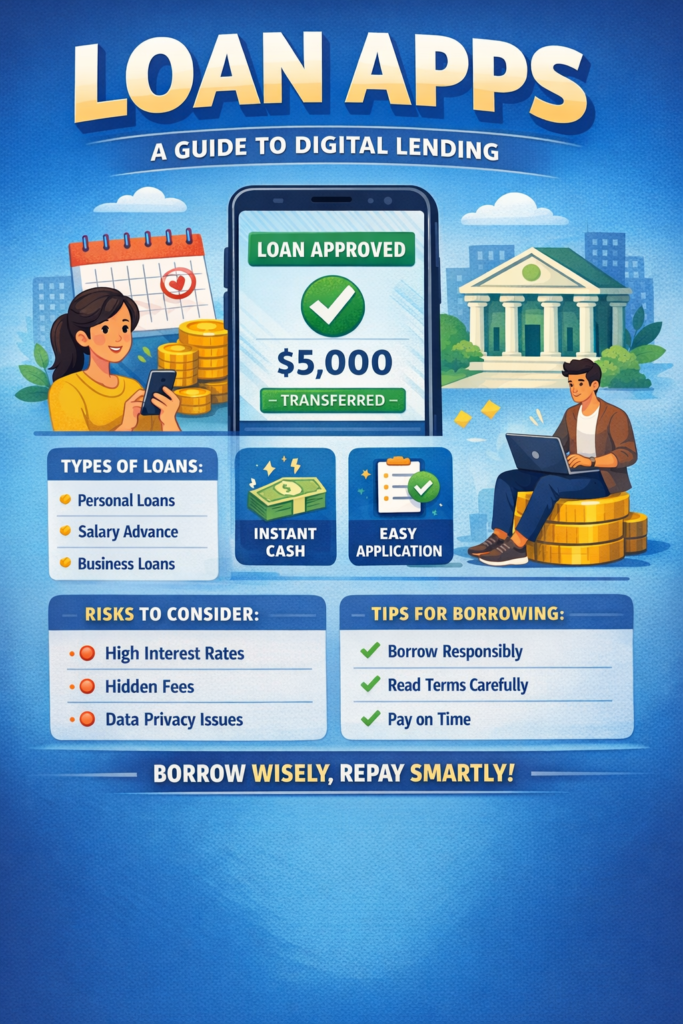
Types of Loans Offered by Loan Apps
Loan apps provide different financial solutions depending on user needs:
- Personal Loans: Used for emergencies, medical expenses, or daily needs.
- Salary Advance Loans: Short-term loans repaid when the user receives their salary.
- Business Loans: Designed for small entrepreneurs and startups.
- Buy Now, Pay Later (BNPL): Allows users to purchase products and pay later in installments.
- Student Loans: Small loans for education-related expenses.
These options make borrowing more accessible to people who may not qualify for traditional bank loans.
Benefits of Loan Apps
Loan apps have gained popularity because of several advantages:
1. Fast Approval
Applications are processed quickly, often within minutes, making them ideal for urgent situations.
2. Convenience
Users can apply anytime, anywhere without paperwork or bank visits.
3. Minimal Documentation
Most apps require only digital identity verification instead of lengthy documents.
4. Accessibility
Freelancers and individuals without strong credit histories can still qualify.
5. Flexible Repayment Options
Many platforms offer installment plans suited to different income levels.
Risks and Challenges
While loan apps offer convenience, users must also understand potential risks.
High Interest Rates:
Some instant loan apps charge higher interest compared to banks.
Hidden Fees:
Processing fees, late payment penalties, or service charges may apply.
Data Privacy Concerns:
Unregulated apps may request unnecessary permissions or misuse personal data.
Debt Cycle Risk:
Easy approvals can encourage repeated borrowing, leading to financial stress.
Because of these risks, borrowers should always read terms carefully before accepting any loan.
How to Choose a Safe Loan App
To avoid problems, consider these important factors:
- Check if the app is registered or regulated by financial authorities.
- Read user reviews and ratings.
- Understand interest rates and repayment schedules.
- Avoid apps asking for excessive phone permissions.
- Choose platforms with clear customer support options.
Responsible borrowing starts with selecting trustworthy lenders.
Tips for Responsible Borrowing
Loan apps should be used as financial tools, not long-term income solutions. Follow these tips:
- Borrow only what you truly need.
- Calculate repayment ability before applying.
- Pay installments on time to avoid penalties.
- Avoid taking multiple loans simultaneously.
- Use loans for productive or necessary expenses.
Good repayment behavior can also improve your credit profile over time.
The Future of Loan Apps
Digital lending continues to grow rapidly worldwide. Advances in artificial intelligence, secure payment systems, and financial technology are making loans faster and safer. Many financial institutions are partnering with fintech companies to offer hybrid services that combine traditional banking reliability with digital convenience.
In the future, loan apps may provide personalized interest rates, smarter financial advice, and better fraud protection systems.
Conclusion
Loan apps have revolutionized borrowing by making financial assistance faster, easier, and more accessible than ever before. They provide a valuable solution for emergencies and short-term financial needs, especially for people who cannot easily access traditional banking services. However, convenience should always be balanced with responsibility. Understanding terms, choosing reliable platforms, and borrowing wisely are essential for avoiding financial difficulties.
When used carefully, loan apps can be a helpful financial tool that supports individuals in managing unexpected expenses and achieving short-term financial goals.